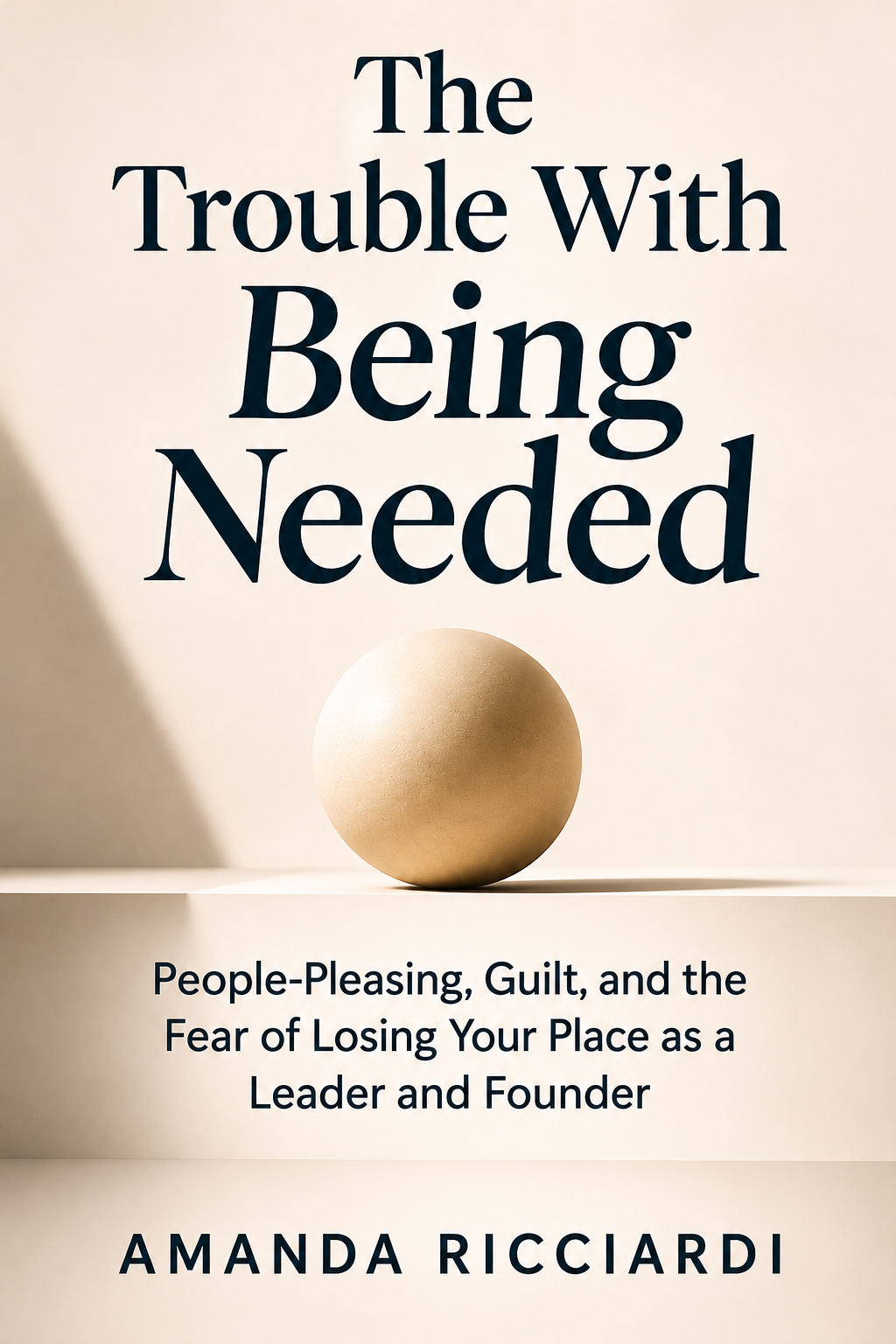
You turn down one more request at work. A colleague or client says “That’s fine,” and an hour later you’re offering to help anyway. The Trouble With Being Needed gives you four small steps to say no and keep your evening.
Pause before you send the follow-up. Listen: if you notice your chest tighten, take three slow breaths. Choose a reply that reflects what you can genuinely take on. Keep the time you set aside, even when guilt shows up.
"I went in thinking I needed better boundaries and came out understanding why I kept undoing my own."
"She made me feel like there was nothing wrong with me, and somehow that made it possible to actually change."
A colleague takes the report you declined. A senior hire handles the client escalation without your input. Your team runs the meeting without you, and it goes well. Everyone is fine.
A client asks for one more revision after hours. You’ve already said you’ll look at it tomorrow. Then you catch yourself reopening the file after dinner.
Then something in you drops.
By evening you've sent a message. "Just checking that was okay?" Or "Happy to look over a draft if it helps." Maybe you've quietly done the first half of the task so the second half is easier for them.
During the day, the thoughts sound sensible. "I know I need boundaries. I just don't know how to set them without letting people down." "I can make decisions for an entire business, but I second-guess what I need." At two in the morning they sound different: "If I stop being useful, will anyone still choose me?"
If this sounds familiar, you're not alone, and you're not broken. You're doing exactly what you were praised for.
Look closely at where things go wrong. The no usually lands without trouble. What follows is where it unravels. The quiet arrives, the evening opens up, and a part of you reads that space as losing your place. Amanda has a name for that part: the Indispensable Fixer.
Most boundary advice puts the hard part in the conversation. Find the right words. Hold your ground. Stop apologising halfway through the sentence.
That makes sense. The conversation is where your heart races, so it feels like the place to work on.
Over twenty years in counselling rooms and boardrooms, Amanda noticed a clear 'No' rarely failed in the moment. It failed later, once the other person had accepted it and the woman who said it was alone with her own thoughts.
The boundary had worked. She was the one who undid it.
So the real work happens in the hours after a boundary succeeds. Almost nothing you've read has prepared you for that window.
Perhaps you reorganised your calendar and protected the gaps. They filled with more work. You delegated, then fitted something else into the space. The retreat gave you real relief, which lasted until the familiar expectations came back. Coaching or therapy helped you understand yourself better, and you still agreed to things in the relationships where approval matters most.
Maybe you even changed jobs. Before long you were the dependable one again.
Each of these worked on what you do. None of them asked what makes doing something different feel unsafe. Amanda compares it to painting over rust on a car: it looks better for a while, but underneath, nothing has changed.
That was never a failure of effort. You were given tools aimed at the part of you other people could see.
For a long time, I could not describe myself without mentioning what I did for someone else.
From the outside I looked capable, independent and confident. Inside, I was shaping myself around what I thought would make me acceptable. Most often it sounded like "I'm fine." I didn't fully believe I was worthy when I had nothing to offer. What I called strength was partly a way of making sure nobody had a reason to leave.
I also placed too much faith in understanding. I could recognise people-pleasing while it was happening and still agree before I'd checked what I wanted. Knowing better only gave my inner critic sharper material: you teach this, so why are you still doing it?
For twenty years, the same woman kept walking into the room. Capable, reliable, the first person anyone called. Holding everything together and quietly losing herself. I recognised her because I had been her.
What finally settled in, slowly, was this. I was already worthy. My place was there before any of the usefulness, achievement or agreement. This book is how I learned to act on that, one decision at a time.
When you feel you still have a place after someone needs less from you, the urge to offer yourself back loses its grip.
Amanda calls this Belonging Without Earning. Plenty of capable women can say "I know how to say no now." Far fewer can say "I no longer need to earn my way back into the room after I do."
Think of handing over a major project you used to own end-to-end. With this in place, you walk out of the briefing and get on with your evening. You don’t send three check-in messages an hour later or quietly redo the timeline yourself. You trust your leadership still counts, even when you aren't the one holding all the moving pieces.
That trust doesn't arrive as a mood. It grows from evidence: kept promises, and a written record comparing what you feared would happen with what actually did.
Four steps to keeping your time after a no. The method works on the fear underneath the automatic yes, so the new behaviour has something to stand on once the guilt shows up.
"She actually helps you figure out why the tools you've already tried didn't work."
"I went in thinking I needed better boundaries and came out understanding why I kept undoing my own."
"She made me feel like there was nothing wrong with me, and somehow that made it possible to actually change."
Sarah, A Senior Director was well regarded, the person everyone called when something needed to hold, and most nights she was still working at 9pm. She arrived sure she had a time-management problem.
When she was ready to look, the rule underneath was clear enough to write down: "If I am not constantly productive and helpful, I am disappointing people, and if I disappoint people, I am unsafe." She had been the oldest child in a family where praise depended on achievement.
Once she stopped fixing her schedule and got curious about the drop she felt when someone didn't need her, her old tools finally had somewhere to land. She began closing her laptop at 5.15pm. When a late project landed on her desk, she said to her director: "I would love to support this project, but my capacity is currently full with our current deliverables due this month. If this takes priority, which of my current projects should we pause?"
Her senior shifted the timeline. Sarah went home on time.

Amanda Ricciardi is a psychotherapist, coach and executive advisor who works with high-functioning women: female founders and senior corporate leaders who look capable on the outside while quietly losing themselves.
She holds a Bachelor of Counselling and an MBA. For twenty years she has worked in one-on-one therapy rooms, in boardrooms and in executive advisory work, across burnout recovery, mental health, corporate health, individual and organisational behavioural change.
The tools in this book come from that work. The understanding under them, she says, she had to earn in her own life first. She once couldn't describe herself without mentioning what she did for someone else. She founded Worthy Woman Co. because the same capable woman kept walking into her rooms, and she recognised her.
Her aim is simple: to help female founders, senior and corporate leaders bring their inner capacity into alignment with their external ambition—so they can lead with clarity, care deeply about their people and their mission, without being the safety net for everything.
Say no to the demands you were never meant to hold—and keep your time, your clarity, and your life outside of work.